


iF Design Award 2027: why design in digital health can prevent medical errors
When we think of medical errors, we usually imagine a clinical failure. But a meaningful share of errors in health happen earlier: in a poorly designed screen, a confusing form, or a result a patient doesn't understand. That's why it's worth paying attention to the fact that the iF Design Award, one of the oldest design awards in the world, has kept a dedicated Medicine/Health category for years.
What this category recognizes
Organized since 1954 in Germany, the iF Design Award evaluates products across nine disciplines — including product, UX, and service design — with a jury of more than 130 independent experts. The Medicine/Health category specifically evaluates products, devices, and systems built for patients or medical staff: from clinical equipment to software and digital health platforms.
What the jury looks for isn't just whether something "looks good," but whether it works well for whoever uses it at a moment when getting it wrong has real consequences.
Three examples of why design is part of clinical safety
- A poorly designed radiology worklist can cause a radiologist to lose track of an urgent study among dozens of cases sorted without a clear criterion.
- A confusing patient portal makes someone abandon reviewing their own result, or fail to understand an important medical instruction.
- An admission form with too many steps increases the odds of a relevant clinical detail being recorded incorrectly — an allergy, a dose, a prior condition.
None of these are "cosmetic" problems. They're design problems that translate directly into clinical risk or a worse care experience.
Ready to digitize your health center?
Discover how Davix can transform your hospital or clinic management with world-class technology.
Schedule Free DemoWhat you should expect from a good health platform
If you're a doctor, good design shows up in what you don't have to think about: finding the next study, completing a report, seeing a patient's history without jumping across five different screens. If you're a patient, it shows up in being able to understand your result, your appointment, or your instructions without having to call the clinic to have it explained again.
Awards like the iF Design Award put healthy pressure on the entire health tech industry to take seriously something that used to be treated as secondary: a well-designed product isn't a luxury, it's part of how a patient is cared for and how a doctor's time is protected.
This post is part of a series on health innovation awards for 2026-2027. We also cover the Fierce Healthcare Innovation Awards, the Vadian VBHC Innovation Award, the MedTech World Awards Europe, and the Global Business Tech Awards 2027.
Want to see a clinical workflow designed so a doctor or a patient never has to think twice? Schedule a demo with Davix.
Related articles

Fierce Healthcare Innovation Awards 2026: what it reveals about the future of digital health
The Fierce Healthcare Innovation Awards 2026 recognize technology with measurable impact on health. What its categories mean for the care patients and doctors will receive in the coming years.

Global Business Tech Awards 2027: digital health is now playing in tech's big leagues
The HealthTech category of the Global Business Tech Awards 2027 competes alongside fintech and AI. What it means that digital health is no longer judged as a niche, but as first-tier technology.
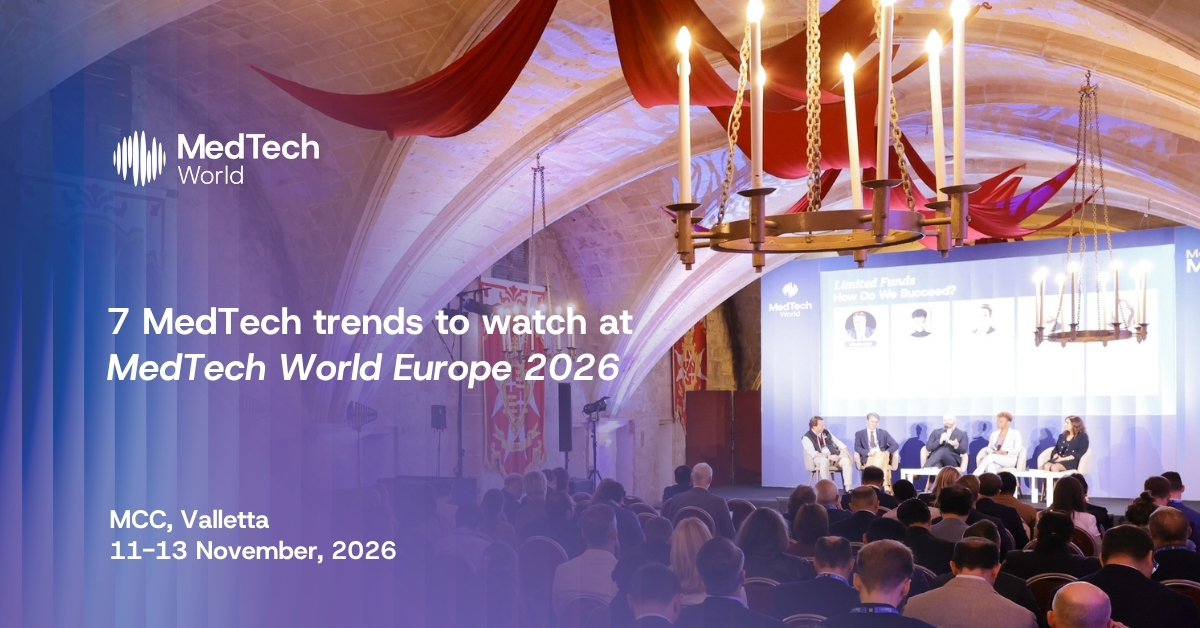
MedTech World Awards Europe 2026: where health innovation is heading
With 25 categories, the MedTech World Awards Europe 2026 map out the full landscape of health innovation, from artificial intelligence to wearables. Which trends deserve a spot on your radar.