

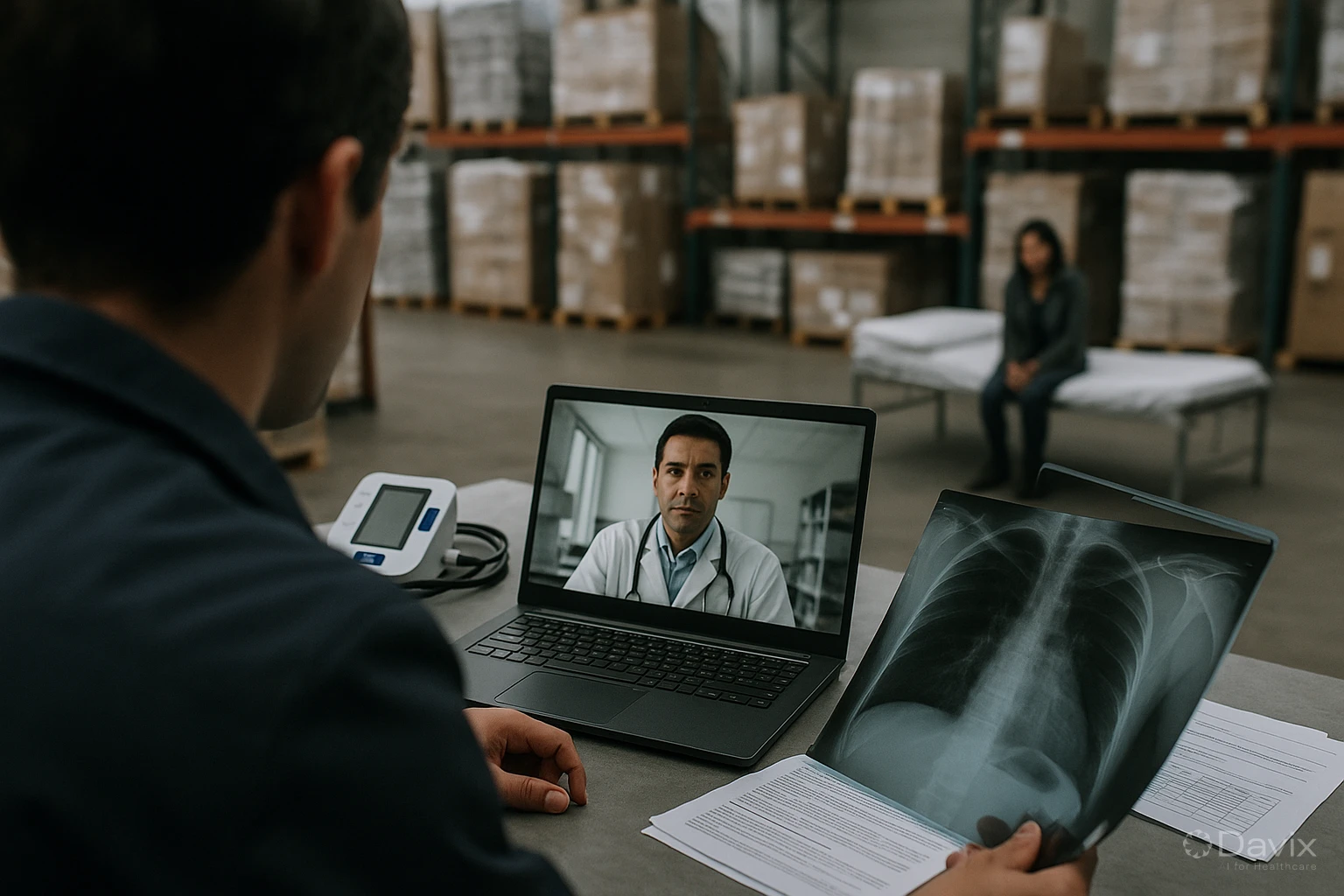
Telemedicine in Chile: Regulation, Advances, and Perspectives (2026)
Chile has made significant advances in telemedicine, driven by MINSAL's National Telehealth Program and accelerated by the pandemic. In 2026, telemedicine is an established care modality in both the public sector (FONASA) and private sector (ISAPRE), with a regulatory framework that, while still evolving, allows operation with legal certainty.
Legal framework
Law 20,584 — Patient rights and duties
Establishes patient rights that also apply to telemedicine care: information, consent, privacy, and access to medical records.
Exempt Resolution 467/2020 — Telemedicine services
Incorporates teleconsultation as a valid service in the FONASA fee schedule, allowing its billing and coverage.
DS 41/2012 — Medical records regulation
Applies to electronic medical records used in telemedicine. Establishes content, storage, and access requirements.
Law 19,799 — Electronic signature
Enables advanced electronic signatures for medical documents, including prescriptions and certificates issued via telemedicine.
National Telehealth Program (MINSAL)
MINSAL leads the National Telehealth Program coordinating:
- Public sector teleradiology network
- Hospital specialty teleconsultation
- Teledermatology as a flagship program
- Telepathology at reference centers
Implemented modalities
| Modality | Public sector | Private sector |
|---|---|---|
| Teleconsultation | ✅ Implemented in PHC and hospitals | ✅ Wide adoption |
| Teleradiology | ✅ National remote reading network | ✅ Imaging centers |
| Teledermatology | ✅ MINSAL flagship program | ⚠️ Early stages |
| Telepathology | ✅ Reference centers | ⚠️ Pilot |
| Telemonitoring | ✅ Chronic care programs | ✅ Private clinics |
| Telesurgery (assisted) | ⚠️ Research | ⚠️ Research |
Ready to digitize your health center?
Discover how Davix can transform your hospital or clinic management with world-class technology.
Schedule Free DemoNotable advances
1. Public teleradiology network
Chile has one of the most mature public teleradiology networks in Latin America. Rural hospitals send studies to reference centers for remote reading, reducing report turnaround from days to hours.
2. Teledermatology
MINSAL's teledermatology program allows primary care physicians to send clinical photos to dermatologists for asynchronous teleconsultation. It reduces specialty waiting lists.
3. FONASA/ISAPRE coverage
Both FONASA and ISAPREs cover teleconsultation as a valid service. Vouchers are issued the same as for in-person visits.
4. MINSAL interoperability guide
MINSAL has published interoperability guides based on HL7 FHIR, laying the foundation for a connected digital health ecosystem.
Requirements for implementing telemedicine in Chile
For private providers
| Requirement | Detail |
|---|---|
| Health authorization | Telemedicine activity must be included in your authorization |
| Technology platform | Must guarantee data privacy and security |
| Consent | Inform patient about the modality and obtain consent |
| Medical record | Register teleconsultation in the electronic medical record |
| Electronic signature | Advanced electronic signature for documents |
| Law 19,628 | Compliance with personal data protection |
Technical requirements
- Internet: Minimum 5 Mbps symmetric for quality video calls
- Platform: End-to-end encryption, optional recording with consent
- EMR: Medical record system that registers teleconsultation
- PACS: For teleradiology, cloud PACS with web access
- Interoperability: HL7 FHIR support per MINSAL guidelines
Private sector opportunities
1. Waiting list reduction
Teleconsultation doubles care capacity without expanding physical infrastructure. Especially relevant for high-demand specialties.
2. Teleradiology as a service
With a cloud PACS, imaging centers can offer remote reading to clinics and hospitals without on-staff radiologists. A growing business model.
3. Regional care
Chile's geography makes specialist access difficult outside Santiago, Valparaiso, and Concepcion. Telemedicine is the natural solution.
4. Expatriate and traveler patients
Private clinics can offer teleconsultation to Chileans abroad or foreign residents, expanding their market.
Frequently asked questions
Does FONASA cover teleconsultation?
Yes. Teleconsultation has been in the FONASA fee schedule since 2020. Vouchers are issued the same as for in-person visits.
Do ISAPREs cover teleconsultation?
Most ISAPREs cover teleconsultation. Verify coverage conditions with your specific ISAPRE.
Can I prescribe via teleconsultation in Chile?
Yes, with an electronic prescription signed with an advanced electronic signature per Law 19,799. Controlled substances have additional restrictions.
Do I need special health authorization for telemedicine?
Telemedicine must be contemplated in your health authorization. Consult with the corresponding SEREMI de Salud to update your authorization.
Conclusion
Chile is one of the most advanced Latin American countries in telemedicine:
- FONASA and ISAPRE coverage guarantees economic viability.
- Public teleradiology network is a regional reference.
- FHIR interoperability guides from MINSAL lay the foundation for a connected ecosystem.
- Advanced electronic signatures have full legal validity.
- Davix supports cloud PACS for teleradiology, HIS for teleconsultation, and integrated electronic signature.
Check Davix pricing or schedule a demo to implement telemedicine in Chile.
Related articles
How to Automate Appointment Scheduling at Your Clinic and Reduce Administrative Burden (2026)
Practical guide to automating medical appointment scheduling: reduce phone calls, eliminate double booking, and improve patient experience with digital tools.

How to Migrate Your PACS to the Cloud Without Losing Studies: A Step-by-Step Guide (2026)
Complete guide to migrating from an on-premise PACS to the cloud: planning, DICOM data migration, validation, and best practices to not lose a single study.

Set Up Teleradiology with Davix in 15 Minutes: Step-by-Step Tutorial
Practical tutorial to configure teleradiology with Davix PACS/RIS: from creating users to receiving the first signed report, in under 15 minutes.
