

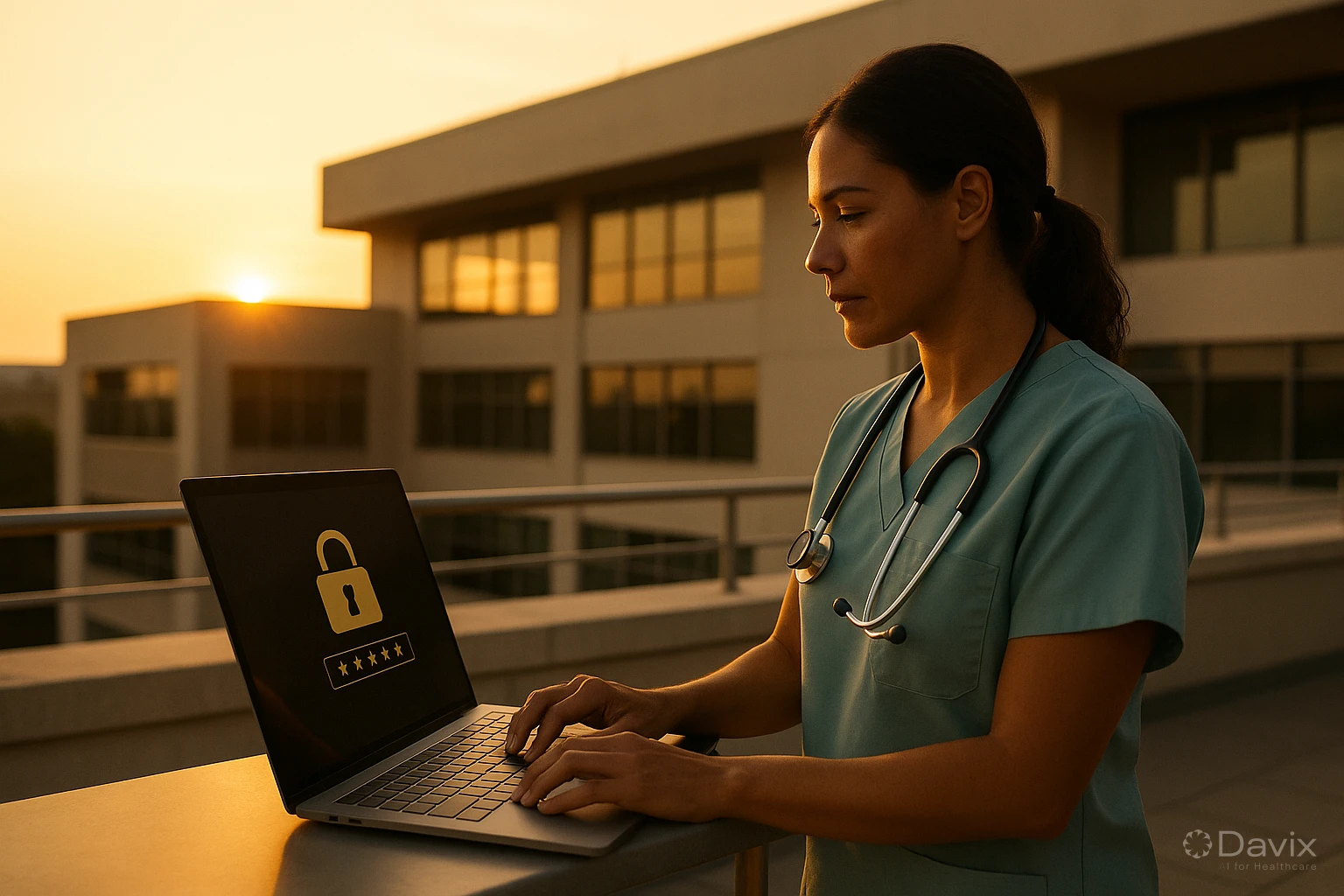
Healthcare Data Security: How to Protect Your Patients' Information in 2026
Healthcare data is the number one target of cyberattacks worldwide. A stolen medical record sells on the black market for up to $250 USD, compared to $5 USD for a credit card record. The reason? Medical data contains personal, financial, and clinical information that can't be changed like a card number: your history of diagnoses, treatments, and conditions follows you for life.
For healthcare institutions in Latin America, this presents a dual challenge: protecting patient data and complying with regulations that tighten year after year. In this article we cover the threats, the regulations, best practices, and how the right technology can be your strongest ally.
Why healthcare data is target #1
Cybercriminals attack the healthcare sector for three main reasons:
- High data value: Clinical histories, lab results, diagnostic images, insurance information, and financial data — all in a single record.
- Vulnerable infrastructure: Many healthcare institutions run legacy systems, unpatched servers, and networks without proper segmentation.
- Operational urgency: A hospital can't stop operating. This makes ransomware attacks particularly effective: the pressure to restore operations leads many institutions to pay the ransom.
In 2025, healthcare was the most attacked sector globally for the third consecutive year, with an average data breach cost of $10.93 million USD according to IBM Security.
Data protection regulations by country
| Country | Main regulation | Applies to healthcare | Key points |
|---|---|---|---|
| Mexico | LFPDPPP + NOM-024-SSA3 | ✅ | Informed consent, privacy notice, regulated electronic medical records |
| Colombia | Law 1581 of 2012 (Habeas Data) | ✅ | Health data are "sensitive"; require explicit consent and enhanced security measures |
| Peru | Law 29733 (Data Protection) | ✅ | Health data are a special category; APDP registration, mandatory consent |
| Chile | Law 19.628 + 2024 reform | ✅ | New Data Protection Agency; fines up to $16M USD |
| Argentina | Law 25.326 (Personal Data) | ✅ | Health data are "sensitive"; require critical-level security measures |
| Brazil | LGPD (Law 13.709/2018) | ✅ | Health data are "sensitive"; fines up to 2% of annual revenue |
| USA (reference) | HIPAA | ✅ | International reference standard; fines up to $1.9M USD per violation |
Important: If your institution treats patients from multiple countries or stores data on servers outside your jurisdiction, you may be subject to more than one regulation simultaneously.
5 most common threats in healthcare institutions
1. Ransomware
Malicious software that encrypts your data and demands payment to release it. In 2025, 67% of ransomware attacks on healthcare succeeded in encrypting data. The average ransom was $1.5 million USD.
2. Targeted phishing
Emails that impersonate vendors, insurers, or colleagues to steal credentials. Healthcare staff are particularly vulnerable because they receive dozens of daily communications from multiple sources.
3. Unauthorized internal access
Employees accessing patient records without clinical justification. This can be out of curiosity (checking a friend's record) or with malicious intent (data sales).
Ready to digitize your health center?
Discover how Davix can transform your hospital or clinic management with world-class technology.
Schedule Free Demo4. Vulnerable medical devices
Imaging equipment, monitors, and medical IoT devices connected to the network with outdated software that serves as an entry point for attackers.
5. Physical data loss
Servers without backups, failing hard drives, stolen computers with unencrypted data. It sounds basic, but it remains one of the most frequent causes of data loss in LATAM.
On-premise vs cloud: which is more secure?
The perception that "having data on my own server is more secure" persists in many institutions, but the evidence says otherwise:
| Criterion | On-premise | Professional cloud |
|---|---|---|
| Data-at-rest encryption | ⚠️ Depends on configuration | ✅ Enabled by default (AES-256) |
| In-transit encryption | ⚠️ Depends on configuration | ✅ TLS 1.3 mandatory |
| Automatic backups | ❌ Requires manual setup | ✅ Automatic, geo-redundant |
| Security updates | ❌ Manual, frequently delayed | ✅ Automatic, zero downtime |
| 24/7 monitoring | ❌ Requires dedicated IT team | ✅ Included |
| Disaster recovery | ❌ Expensive to implement | ✅ Typical RTO < 4 hours |
| Access auditing | ⚠️ Depends on the system | ✅ Full logs included |
| Security certifications | ❌ Rarely available | ✅ SOC 2, ISO 27001, etc. |
| Regulatory compliance | ⚠️ 100% your responsibility | ✅ Shared responsibility |
| Total security cost | ❌ $20K–$100K USD/year | ✅ Included in subscription |
Takeaway: A professional cloud provider invests millions of dollars per year in security that an individual institution can hardly replicate. The key is choosing a provider that meets the right standards.
10 security best practices for healthcare institutions
- Implement multi-factor authentication (MFA) on all clinical system access. It's the most effective measure against credential theft.
- Encrypt data at rest and in transit. If a disk or server is compromised, encrypted data is useless to the attacker.
- Apply the principle of least privilege. Each user should only access data needed for their role. An administrator doesn't need to see clinical diagnoses.
- Train your staff regularly. Most breaches start with a click on a phishing link. Quarterly simulations significantly reduce risk.
- Keep systems updated. Security patches are not optional. 60% of breaches exploit known vulnerabilities with available patches.
- Implement automated backups with off-site copies. Periodically verify that backups are restorable.
- Segment your network. Medical devices, clinical systems, and the administrative network should be isolated. An attack on the visitor Wi-Fi network shouldn't reach your PACS.
- Log and audit all access to clinical records. Logs should be immutable and reviewable.
- Have a documented and rehearsed incident response plan. When a breach occurs, the first hours are critical.
- Use electronic signatures for all clinical documents. This ensures document integrity and signer identity.
How Davix protects your patients' data
Davix implements enterprise-grade security across all layers:
- AES-256 encryption for data at rest and TLS 1.3 for data in transit.
- Multi-factor authentication available for all users.
- Role-based access control — Configure what each profile (physician, technologist, administrator, patient) can see and do.
- Complete audit logs — Every access, modification, and query is recorded with user, date, time, and IP.
- Automatic geo-redundant backups — Your data is backed up daily across geographically separated locations.
- Integrated electronic signing — Radiology reports, lab results, and clinical documents are digitally signed with legal validity.
- Automatic security updates — No maintenance windows or manual patches.
- Certified cloud infrastructure — Hosted on infrastructure that meets international security standards.
Frequently asked questions
Is it more secure to keep my data on my own server than in the cloud?
In most cases, no. A professional cloud provider invests significantly more in security (encryption, monitoring, backups, certifications) than an individual institution can afford. The key is choosing a provider that demonstrates compliance with recognized standards and gives you control over your data.
Does Davix comply with data protection regulations in my country?
Davix is designed to comply with the most demanding data protection regulations in the region, including LGPD (Brazil), Law 1581 (Colombia), LFPDPPP (Mexico), and international standards like HIPAA. Consult with our team for specifics about your jurisdiction.
What happens if there's a security breach?
Davix has an incident response protocol that includes: automatic detection, immediate containment, client notification within 24 hours, root cause analysis, and remediation plan. Geo-redundant backups ensure data can be restored even in the worst-case scenario.
Can I audit who accessed a specific patient's data?
Yes. Davix audit logs record every access to every record with details on user, date, time, IP, and action performed. These logs are available for review and export, and are useful for both regulatory compliance and internal investigations.
Conclusion
Healthcare data security is not a project you implement once and forget. It's an ongoing process that requires the right technology, clear processes, and organizational culture. Key takeaways:
- Healthcare data is the most valuable and most attacked asset. Protecting it is not optional.
- LATAM regulations tighten every year. The cost of non-compliance far exceeds the cost of prevention.
- Professional cloud beats on-premise in security for the vast majority of healthcare institutions.
- Best practices are well known. The challenge is implementing them consistently.
- The right technology makes compliance easier. A system that includes encryption, auditing, electronic signing, and automatic backups gives you a head start.
Check Davix pricing or schedule a demo to learn how we protect healthcare institution data across all of Latin America.
Related articles
How to Automate Appointment Scheduling at Your Clinic and Reduce Administrative Burden (2026)
Practical guide to automating medical appointment scheduling: reduce phone calls, eliminate double booking, and improve patient experience with digital tools.
How to Migrate Your PACS to the Cloud Without Losing Studies: A Step-by-Step Guide (2026)
Complete guide to migrating from an on-premise PACS to the cloud: planning, DICOM data migration, validation, and best practices to not lose a single study.

Set Up Teleradiology with Davix in 15 Minutes: Step-by-Step Tutorial
Practical tutorial to configure teleradiology with Davix PACS/RIS: from creating users to receiving the first signed report, in under 15 minutes.
