

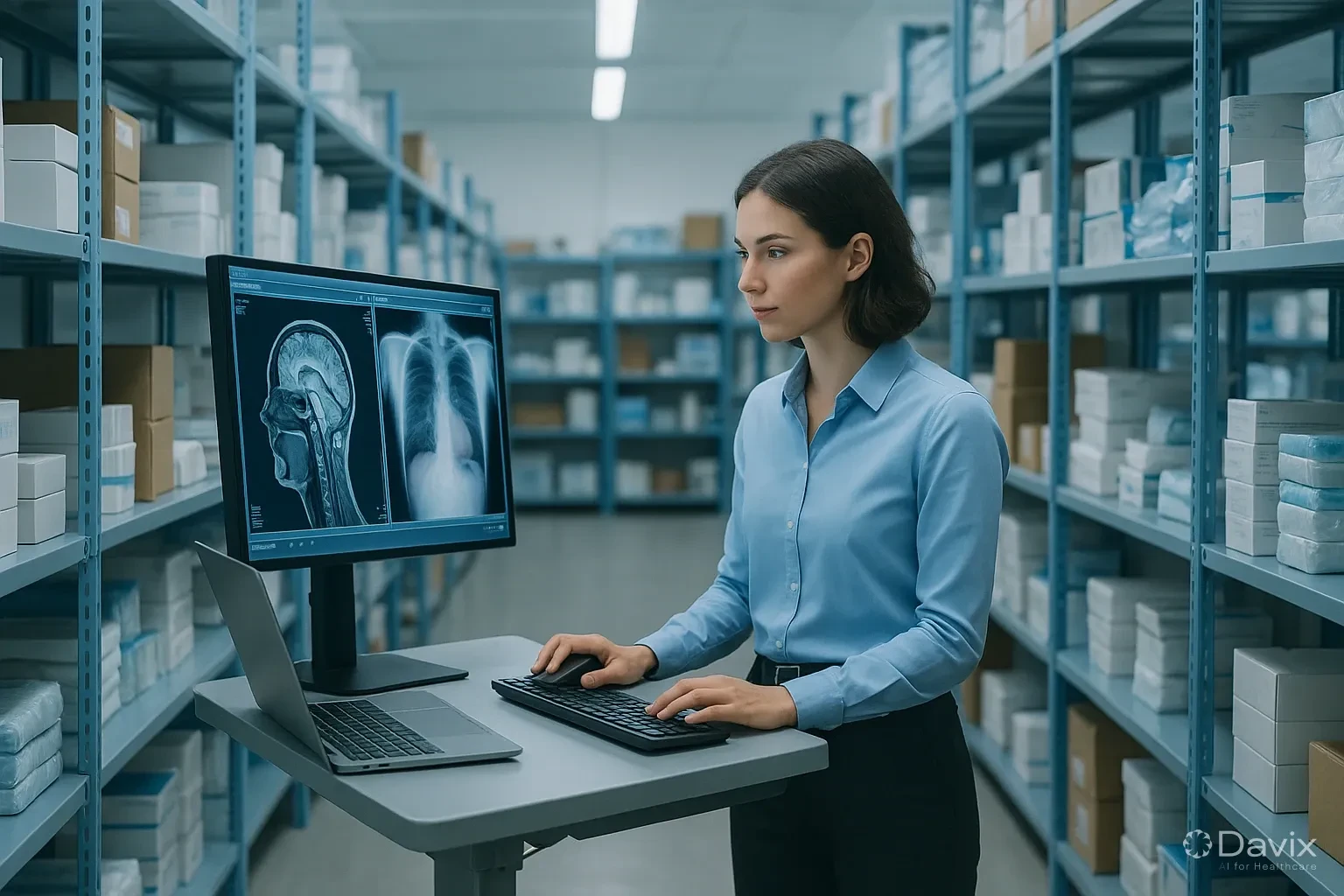
What Is a PACS and Why Is It Essential for Your Healthcare Facility?
If you work in a healthcare facility that performs imaging studies — X-rays, CT scans, MRIs, or ultrasounds — you've likely heard the term PACS. But what exactly does it mean, and why has it become a cornerstone of modern hospital infrastructure? In this article, we break it down in a clear and practical way.
What Is a PACS?
PACS stands for Picture Archiving and Communication System. It is a technology platform designed to acquire, store, manage, and distribute medical images digitally, completely eliminating the need for physical radiological film.
In simple terms, a PACS is the system that allows images generated by diagnostic equipment — such as CT scanners, X-ray machines, or MRI units — to reach the radiologist's screen, the treating physician, or any authorized specialist instantly, regardless of where they are within the hospital or healthcare network.
Key Components of a PACS
A PACS system is made up of four main components that work in coordination:
- Image acquisition devices: These are the modality equipment (CT, MRI, CR, US, among others) that generate diagnostic images and send them to the system in DICOM format.
- Archive server: The heart of the PACS. It stores images and their associated metadata in secure databases, either on local servers or in the cloud.
- Workstations: Computers with high-resolution monitors and specialized software where radiologists view, manipulate, and diagnose images.
- Communication network: The network infrastructure (LAN, WAN, or internet) that connects all components and enables rapid image transfer between devices and locations.
How Does a PACS Work?
The workflow of a PACS follows a well-defined process that can be summarized in three stages:
-
Acquisition: When an imaging study is performed, the modality equipment generates files in DICOM (Digital Imaging and Communications in Medicine) format, the international standard for medical images. These files include not only the image itself but also patient information, study type, date, and technical parameters.
-
Storage: The DICOM images are automatically transmitted to the PACS archive server, where they are indexed and stored in an organized manner. Modern systems use cloud storage with redundancy, ensuring the availability and security of information over the long term.
-
Distribution and viewing: Once stored, images are available for consultation from any authorized workstation. Physicians can access studies instantly, compare them with previous studies, take measurements and annotations, and share findings with colleagues.
Ready to digitize your health center?
Discover how Davix can transform your hospital or clinic management with world-class technology.
Schedule Free DemoBenefits of Implementing a PACS
Adopting a PACS profoundly transforms the operations of an imaging department. Here are the most significant benefits:
- Elimination of physical film: Costs for supplies (films, developing chemicals, envelopes) are reduced, and physical space previously occupied by film archives is freed up.
- Immediate access to images: Wait times are drastically reduced. A radiologist can begin interpreting a study seconds after it was performed, improving diagnostic turnaround times.
- Remote access and telemedicine: With a cloud-based PACS, specialists can review images from any location with internet access, enabling teleradiology and facilitating second opinions.
- Integration with HIS and RIS: A modern PACS integrates with the Hospital Information System (HIS) and the Radiology Information System (RIS), creating a unified workflow that reduces transcription errors and data duplication.
- Complete patient history: All of a patient's images are stored centrally, allowing studies to be compared over time and enabling better-informed clinical decisions.
- Enhanced information security: PACS systems include access controls, query auditing, and automatic backup, complying with health data protection regulations.
Why Is It Especially Important for Latin America?
In many Latin American countries, healthcare facilities face particular challenges that make a PACS a strategic tool:
- Shortage of radiologists: Teleradiology enabled by a PACS allows a specialist to serve multiple facilities from a central location, optimizing a human resource that is limited in the region.
- Distributed infrastructure: Public and private healthcare systems often have geographically dispersed networks of clinics and hospitals. A cloud-based PACS connects these facilities and centralizes image management.
- High operational costs: Maintaining a workflow based on physical film is significantly more expensive than operating digitally. The investment in a PACS is recovered in relatively short timeframes thanks to savings on supplies and space.
- Digital transformation in healthcare: Governments in the region are actively driving the digitization of the healthcare sector. Having a PACS positions institutions to comply with regulations and standards that require interoperability and electronic health records.
Conclusion
A PACS is not simply a technology tool — it is the backbone of digital imaging. Implementing one means improving diagnostic speed, reducing operational costs, enabling telemedicine, and delivering a better experience for both healthcare professionals and patients.
At Davix, we developed a PACS solution designed specifically for the needs of healthcare facilities in Latin America: scalable, cloud-based, and natively integrated with our ecosystem of clinical tools. If your institution still relies on physical film or uses an outdated system, it's time to take the step toward modern digital imaging.
Related articles

From Chatbots to Intelligent Agents: How Davix Growth Is Transforming Healthcare Sales
From the FIME 2019 prediction about healthcare chatbots to the intelligent agents of 2026. How Davix Growth revolutionizes healthcare sales with autonomous, multilingual, and specialized AI.
Why Generic ERPs Fail in Hospitals (and What to Use Instead)
Comparative analysis of generic ERPs like SAP, Oracle, and Odoo versus specialized healthcare platforms. Discover why clinical workflows demand software designed for hospitals and clinics.
3 healthcare and radiology events you can't miss in 2026
Guide to the 3 most important healthcare and radiology congresses and expos for Latin American professionals in 2026: JPR São Paulo, ICR Cartagena, and WHX Miami. Dates, links, and why you should attend.