

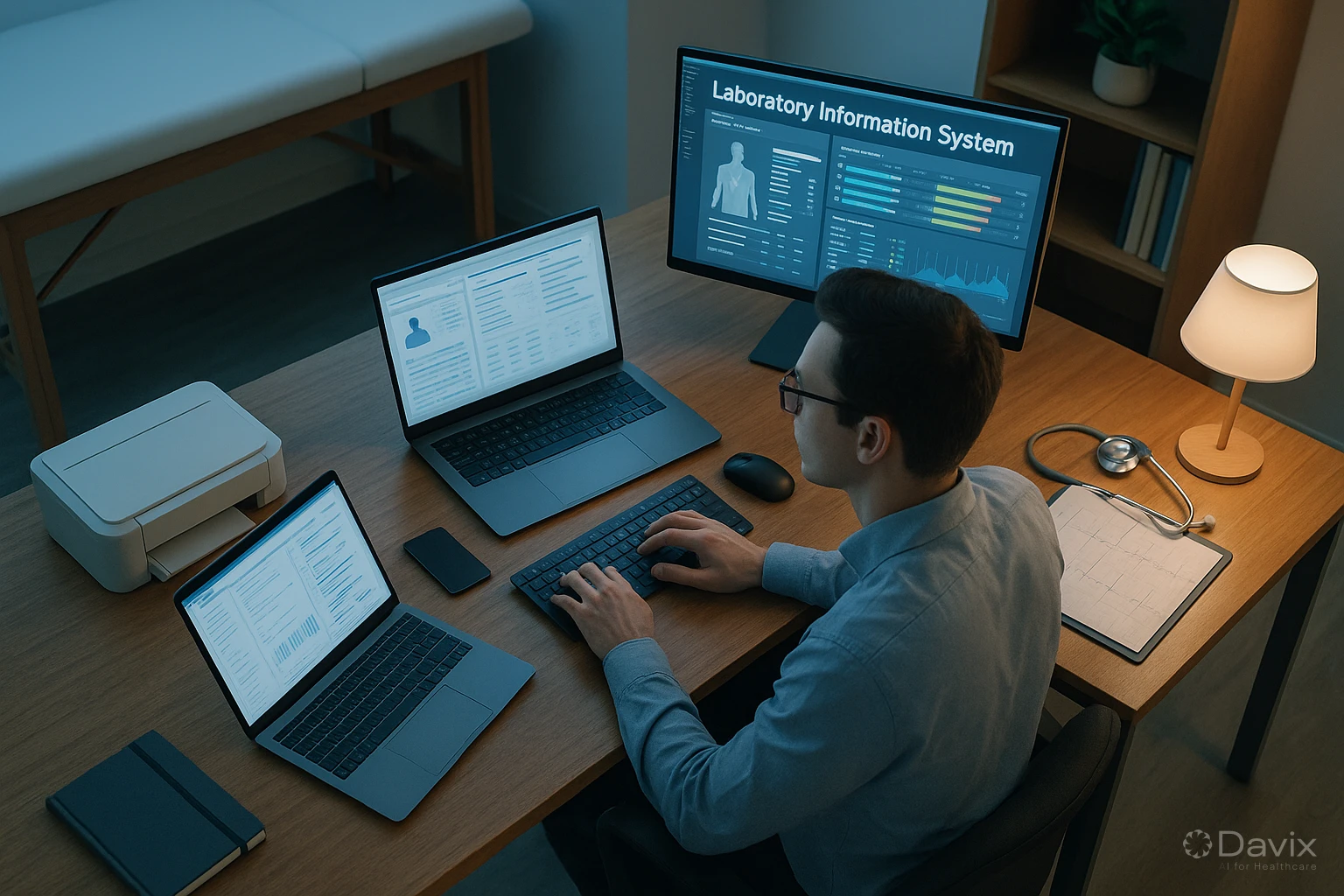
LIS: How a Laboratory Information System Transforms Your Operations
The clinical laboratory is one of the most critical pillars of any healthcare institution. It is estimated that between 60% and 70% of medical decisions depend directly on laboratory results. Yet many laboratories still operate with manual processes that create bottlenecks, transcription errors, and unnecessary delays. This is where the LIS (Laboratory Information System) comes into play — a tool that is redefining how laboratories manage their daily operations.
What Is a LIS and Why Does It Matter?
A Laboratory Information System (LIS) is a software platform designed specifically to manage, automate, and optimize all workflows within a clinical laboratory. From receiving the medical order to delivering results to the patient, the LIS acts as the central nervous system connecting people, equipment, and information.
Unlike a spreadsheet or a generic management system, a LIS is built to meet the specific needs of the laboratory environment: sample traceability, quality control, regulatory compliance, and delivery speed.
Workflows That a LIS Automates
The true power of a LIS is demonstrated in automating workflows that traditionally consume time and resources. Here are the most relevant ones:
- Order entry: The LIS receives study requests electronically from the hospital system or physician's office, eliminating manual data entry and associated errors.
- Sample registration and tracking: Each sample receives a unique code (typically a barcode or QR code) that enables real-time tracking from collection through processing.
- Analytical processing: The system communicates directly with laboratory equipment (analyzers) through bidirectional interfaces, sending the tests to be performed and receiving results automatically.
- Result validation: Results go through pre-configured technical and clinical validation rules, alerting the professional when a value falls outside the expected range or presents inconsistencies.
- Report generation: Once validated, results are compiled into standardized reports that can be delivered digitally to the physician or directly to the patient through a web portal.
Concrete Benefits of Implementing a LIS
Adopting a LIS is not simply digitizing what is already done on paper. It is an operational transformation with measurable impacts:
- Speed: Turnaround times (TAT) are significantly reduced by eliminating manual steps and automating communication with analytical equipment.
- Accuracy: By minimizing manual transcription, pre-analytical and post-analytical error rates decrease notably.
- Complete traceability: The LIS records every action, every user, and every moment in the sample chain of custody, which is essential for audits and accreditations.
- Integration with other systems: A good LIS does not operate in isolation; it connects with the institution's digital health ecosystem.
- Operational efficiency: Fewer reprocessing events, fewer calls to check on results, and better workload distribution among staff.
Ready to digitize your health center?
Discover how Davix can transform your hospital or clinic management with world-class technology.
Schedule Free DemoHow a LIS Integrates with PACS, HIS, and Patient Portals
One of the most strategic aspects of a modern LIS is its capacity for interoperability. In a hospital environment, clinical data should not exist in silos. The LIS connects with other key systems through standards like HL7 and FHIR:
- HIS (Hospital Information System): The LIS receives medical orders from the hospital system and returns results to the electronic health record, creating a continuous flow of information without manual intervention.
- PACS (Picture Archiving and Communication System): In pathology labs or departments that generate diagnostic images, the LIS can link with the PACS to associate images with the corresponding clinical cases.
- Patient portals: Validated results are automatically published on a web portal or mobile app where the patient can access them securely, reducing the laboratory's administrative burden and improving the user experience.
This integration not only streamlines processes but also improves care continuity and enables physicians to make faster, better-informed decisions.
Key Features a LIS Should Have
Not all laboratory information systems are created equal. When evaluating options, it's important to consider the following capabilities:
- Intuitive interface: Lab staff need a system that is easy to learn and fast to operate, without requiring extensive training.
- Configurability: Every laboratory has different workflows. The LIS should allow configuration of test profiles, validation rules, and report formats without depending on the vendor for every adjustment.
- Multi-site support: If the institution operates across multiple locations, the LIS should centralize information and enable unified management of results and catalogs.
- Quality control module: Integrated tools for managing internal and external controls (Westgard, Levey-Jennings) and meeting accreditation standards.
- Security and regulatory compliance: Data encryption, role and permission management, and audit logs that comply with local and international health data protection regulations.
- Cloud or hybrid architecture: Cloud-based solutions offer advantages in scalability, automatic updates, and infrastructure cost reduction, without sacrificing data control.
Conclusion: The LIS as the Engine of a Modern Laboratory
The clinical laboratory of the future is not just the one with the best analytical equipment, but the one that manages its information intelligently. A well-implemented LIS becomes the engine that drives efficiency, quality, and satisfaction for both healthcare professionals and patients.
Davix LIS was designed with the real needs of the Latin American clinical laboratory in mind: a modern, cloud-based platform with native integration to hospital systems and patient portals, and the flexibility to adapt to laboratories of any size. If you're looking to transform your laboratory operations, Davix is the starting point.
Related articles
From Chatbots to Intelligent Agents: How Davix Growth Is Transforming Healthcare Sales
From the FIME 2019 prediction about healthcare chatbots to the intelligent agents of 2026. How Davix Growth revolutionizes healthcare sales with autonomous, multilingual, and specialized AI.

Why Generic ERPs Fail in Hospitals (and What to Use Instead)
Comparative analysis of generic ERPs like SAP, Oracle, and Odoo versus specialized healthcare platforms. Discover why clinical workflows demand software designed for hospitals and clinics.
3 healthcare and radiology events you can't miss in 2026
Guide to the 3 most important healthcare and radiology congresses and expos for Latin American professionals in 2026: JPR São Paulo, ICR Cartagena, and WHX Miami. Dates, links, and why you should attend.